"I couldn't be more thrilled with my decision to go solar, and Synergy Energy Solutions made the entire process seamless and enjoyable. From the initial consultation to the final installation, their professionalism, expertise, and dedication to customer satisfaction were evident every step of the way. The installation crew was punctual, efficient, and left my property spotless."
Carbon Fibre Wall & Ceiling Heating: The Most Energy Efficient Home Heating in South Africa
Carbon fibre wall heating is the thinnest, fastest-installed and most solar-friendly way to warm a home in South Africa. Synergy designs, installs and commissions complete 48 V DC systems nationwide, saving homeowners up to 90% on heating costs when paired with a solar PV installation, and working invisibly behind any standard wall or ceiling finish.
Book a Free Site Assessment See How It WorksInvisible, Solar-Direct Warmth: Powered by 48 V Carbon Fibre, Not Hot Air
Synergy Energy Solutions installs carbon fibre wall and ceiling heating across South Africa from three branches: Centurion (Gauteng HQ), Cape Town (Western Cape) and Polokwane (Limpopo). All branches share one phone number, 010 601 6464. Whole-home systems start from approximately R1 150 per square metre, save 50 to 90% on heating costs, and couple directly to solar hybrid inverters. SAPVIA-aligned, PV GreenCard accredited, ECA-affiliated. Installed to SANS 10142 electrical standards using safe 48 V DC, with Certificate of Compliance issued on every job.
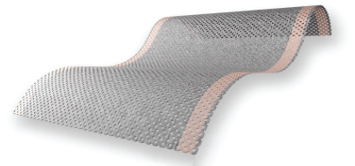
Carbon fibre wall heating uses a patented conductive carbon film bonded to the wall or ceiling surface. A safe 48 V DC current passes through the film, which radiates infrared warmth directly into the room, like sitting in winter sunshine. There are no hot elements, no fans, no ducts and no moving parts. The film disappears behind plaster, paint, tiles, wallpaper or Rhino-lite, making it the only heating system that truly leaves your interior design untouched.
- End-to-end design, supply and commissioning by specialist solar technicians, certified by a PV GreenCard accredited electrician, with a Certificate of Compliance issued on every job.
- Room-by-room heat-load calculations and zone design, no one-size-fits-all packages.
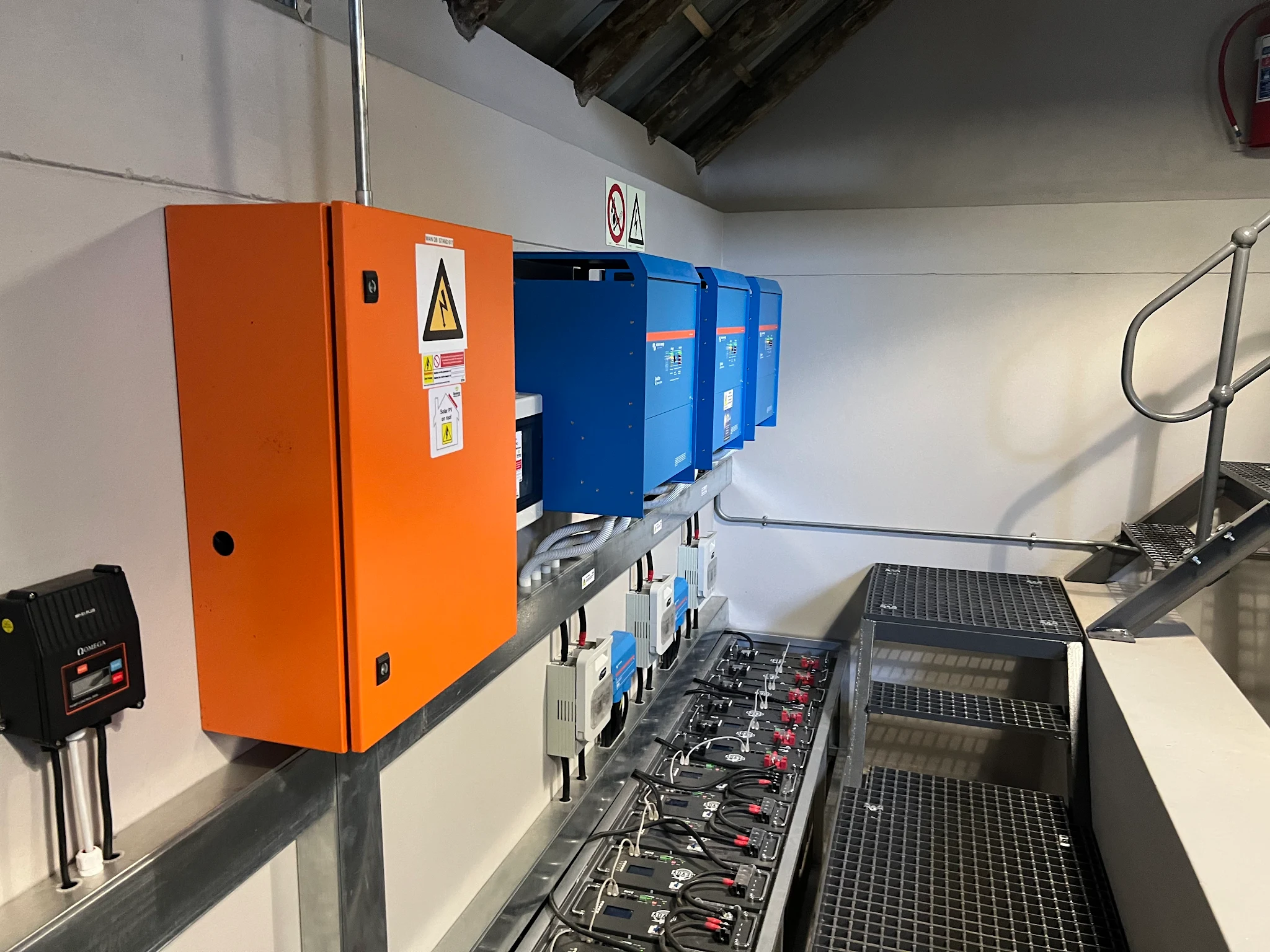
- Direct DC coupling to Victron, Sunsynk, Sigenergy and Tesla Powerwall 3 hybrid inverters, effectively free heat from your solar PV during daylight hours.
- Operates at only 48 V DC, below the 50 V AC shock-hazard threshold under SANS 10142, and safe to install behind a child's bedroom wall.
- Rated at 220 W per m² and cycles under thermostat control, a small heated zone draws low enough on average that a modest battery can cover several hours of load shedding.
Who this suits best: homeowners retrofitting older homes without lifting floors, sectional-title flats where structural work isn't permitted, solar-first builds, families with asthma or dust allergies, and anyone tired of noisy aircons, gas fumes or oil heaters. If you're building new on a slab and want toasty feet on tiles, hydronic underfloor heating may suit you better, we install both and will recommend honestly.
The Synergy difference. Every system is engineered room-by-room: we calculate heat loads, map panel layouts, confirm your inverter's DC capacity and select the panel coverage and thermostat zoning sized for your actual living patterns, not a one-size-fits-all package.
Why South African Homeowners Choose Carbon Fibre Heating
A single system delivers comfort, dramatic energy savings, healthier indoor air and total design freedom, without the noise, dust, ducting or running costs of traditional heating, and with no floor lifting required.
Save up to 90% on heating costs
Carbon fibre radiates infrared warmth directly into the room with zero downward loss and zero ducting loss. Running cost is 50 to 90% lower than conventional electric heating, and effectively zero on sunny winter days when coupled to your solar PV.
Healthier indoor air
Radiant heat doesn't blow dust, pollen or pet dander around the room, a meaningful comfort upgrade for households with asthma or allergies, particularly in pollen-heavy Gauteng and Cape Town winters.
Smart-home ready controls
Schedule heating per zone, monitor runtime and tweak temperature from your phone. Wi-fi thermostats integrate with modern smart-home platforms and with Synergy's solar monitoring, so you only heat rooms when they're used.
Total design freedom
The thin carbon film disappears behind plaster, paint, tiles, wallpaper or Rhino-lite. No radiators, no bulky heaters, no visible ducting and no floor build-up, the only heating system that truly leaves your interior untouched.
Solar-direct DC coupling
Runs natively on 48 V DC. Couples directly to Victron, Sunsynk, Sigenergy and Tesla Powerwall 3 hybrid inverters, no extra inverter losses. Your solar generation heats the home in real time, and a modest battery covers load shedding.
Safe, silent & child-friendly
48 V DC is below the SANS 10142 shock-hazard threshold. No exposed elements, no hot surfaces, no fans, no moving parts. Safe to install behind a child's bedroom wall, and completely silent in operation.
The Five Building Blocks of Every Synergy Installation
Every carbon fibre wall heating system we install is built from five precision components, each chosen for reliability in South African conditions and certified for solar-direct operation.
The Heating Element
Carbon Fibre FilmComponent 1
- Patented 0.3 mm conductive carbon film element
- 600 mm wide panels cut to suit each zone (up to 6 m per circuit)
- Rated 220 W per m², cycles under thermostat control
- Wall or ceiling mount, behind any standard finish
The radiant heart of the system. The 0.3 mm film bonds directly to the wall or ceiling substrate; total installed build-up including the finish layer is approximately 1 mm.
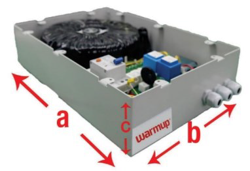
48 V DC TransformerComponent 2
- Steps grid AC down to safe 48 V DC
- Below the SANS 10142 shock-hazard threshold
- Bypassed entirely when solar inverter is coupled
- Sized to total panel coverage
The transformer is what makes the system safe and code-compliant. When you have a hybrid inverter, the transformer becomes a backup, the inverter feeds the panels DC-direct.
Solar Coupling & Control
Hybrid Inverter CouplingComponent 3
- Direct DC feed from Victron, Sunsynk, Sigenergy
- Compatible with Tesla Powerwall 3 ecosystem
- No double-conversion losses
- Battery-backed for load-shedding resilience
When connected to a solar hybrid inverter, daytime solar power feeds the heating directly, effectively free heat. Overnight, a modest battery bank covers low-draw heating cycles.
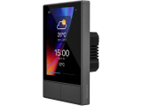
Smart ThermostatsComponent 4
- Per-zone or whole-house wi-fi controls
- Smart-home platform integration
- Phone-app scheduling and remote tweaks
- Runtime monitoring & energy logging
From simple dial thermostats to fully programmable wi-fi controls. Set schedules, create scenes and monitor energy use from anywhere, so you only pay to heat occupied rooms.
Compliance & Documentation
PV GreenCard InstallComponent 5
- Installed by specialist solar technicians
- Certified by a PV GreenCard accredited electrician
- Certificate of Compliance (CoC) issued on every job
- SANS 10142 wiring code adherence
- Installer & manufacturer warranty
Every Synergy install is technician-installed and electrician-certified, with a Certificate of Compliance issued on every job, protecting your home insurance and the resale value of the property.
How the Element Becomes a Finished Wall or Ceiling
The carbonic film element ships at 0.3 mm thick. Once Synergy bonds it to your wall or ceiling and your plasterer or tiler covers it, the total installed build-up is approximately 1 mm, thin enough to disappear behind any standard finish, anywhere in the home.
| Installation Specification | Synergy Standard |
|---|---|
| Total installed thickness | Approximately 1 mm (0.3 mm film + adhesive + finish layer) |
| Mounting surfaces | Wall or ceiling, behind plaster, Rhino-lite, paint, tile or wallpaper |
| Compatible finishes | Plaster, Rhino-lite, paint, wallpaper, tile, decorative cladding |
| Wet-room compatibility | Wet-room variants available for bathrooms, shower walls and steam rooms |
| Standard panel run | 600 mm wide; lengths cut to suit each wall or ceiling zone |
| Maximum length per circuit | 6 m (per manufacturer rating at 48 V DC, 16 A) |
| Solar coupling | Direct DC feed from Victron, Sunsynk, Sigenergy, Tesla Powerwall 3 |
| Compatible heat sources | Grid (via 48 V transformer), solar PV via hybrid inverter, battery storage |
| Control | Wired or wi-fi thermostats; per-zone or whole-house; smart-home compatible |
| South African compliance | SANS 10142 electrical; PV GreenCard installer; Certificate of Compliance issued |
| Expected service life | 25+ years, backed by 10-year manufacturer warranty |
Retrofit or new build? Carbon fibre is the rare heating system that suits both. For new builds we typically install on ceilings before final plaster. For retrofits we install one room at a time on existing walls, then cover with fresh plaster or Rhino-lite, no floors lifted, no screed cure time, the home stays liveable throughout.
The Engineering Behind Carbonic Film Heating
Every system Synergy installs uses the same independently certified carbonic film element, CE-marked, TÜV Rheinland certified, compliant with EU low-voltage and EMF safety directives, and backed by a 10-year manufacturer warranty.
| Specification | Unit | Carbonic Film Heating |
|---|---|---|
| Rated power per square metre | W/m² | 220 ±7.5% |
| Rated power per linear metre | W/m | 121 ±7.5% |
| Total panel width | mm | 600 |
| Copper bus bar width | mm | 20 |
| Active heating width | mm | 550 |
| Voltage input | V DC | 48 |
| Maximum length per circuit | m | 6 |
| Maximum current | A | 16 |
| Current per linear metre | A/lm | 2.52 |
| Electrical resistance | Ω/m² | 34.4 ±7.5% |
| Weight | g/m² | 350 |
| Film thickness | μm | 300 |
| Operating efficiency | % | 99.97 |
| Carbon footprint in operation | - | Zero (when paired with solar) |
| Maintenance requirement | - | None, no moving parts |
| Manufacturer warranty | years | 10 |
International Compliance & Certifications
The Carbonic Film Heating element installed by Synergy is independently certified by TÜV Rheinland and CE-marked for the European Union market. It complies with the following international directives and South African electrical standards:
- CE Mark: European Conformity for electrical safety, health and environment
- TÜV Rheinland Certified: Independent German testing and inspection authority
- Low Voltage Directive (2014/35/EU): EN 60335-2-17:2013, Safety of household appliances, flexible heating elements
- EMF Directive (2014/30/EU): DIN EN 62233:2008, Human exposure to electromagnetic fields from household appliances
- WEEE2 (2012/19/EU): Simple electric device classification
- D2.2.310: Heating and cooling surfaces on walls, ceilings and floors
- SANS 10142: South African wiring code compliance (Synergy installation standard)
What 220 W/m² means in practice. The rated power figure is the draw when the element is actively heating, roughly equivalent to a small hair dryer per square metre, but spread invisibly across the entire wall or ceiling. Under thermostat control in a well-insulated South African home, the panels heat the surface quickly, then cycle off, so the time-averaged draw is significantly lower than the rated figure.
Why 48 V DC matters. The element runs natively on 48 V DC, well below the SANS 10142 shock-hazard threshold, safe to install behind any standard wall or ceiling finish, including behind a child's bedroom wall. The DC input voltage also lets the element couple directly to the DC side of a hybrid solar inverter (Victron, Sunsynk, Sigenergy, Tesla Powerwall 3) with no double-conversion losses, so 99.97% of the solar electricity generated becomes radiant warmth in your home.
10-year manufacturer warranty. The Carbonic Film Heating element is backed by a 10-year factory warranty from the manufacturer, in addition to Synergy's installer warranty. With no moving parts, no compressors and no maintenance requirements, the expected service life in normal residential use is 25 years or more.
Carbon Fibre vs Hydronic Underfloor, Electric Underfloor & Aircon
Every heating technology has a use case. Here's how carbon fibre wall heating stacks up against the most common alternatives in South African homes, honestly, including the trade-offs.
| Feature | Carbon Fibre Wall | Hydronic Underfloor | Electric Underfloor | Aircon "Heat Mode" | Gas / Oil Heater |
|---|---|---|---|---|---|
| Running cost vs electric baseline | 50 to 90% lower | 70 to 90% lower (with heat pump) | High | Similar | Higher (gas cost rising) |
| Solar PV synergy | Excellent (DC-direct) | Excellent (via heat pump) | Good | Via inverter AC only | None |
| Works in existing home | Yes, film is 0.3 mm | New build / major reno | Medium | Yes | Yes |
| Retrofit difficulty | Low (1 to 4 days) | High (1 to 3 weeks) | Medium | Low | Low |
| Floor / wall build-up | ~1 mm installed | 40 to 70 mm screed | 3 to 10 mm | External unit | Free-standing |
| Warm-up time | Minutes | Hours (thermal mass) | Fast | Minutes | Minutes |
| Moving parts to maintain | None | Pumps, valves, manifolds | None | Compressor, fans | Fan, pilot flame |
| Per-room zoning | Standard | Via zone valves (add cost) | Per zone | One per unit | No |
| Dries out the air | No, radiant | No | No | Yes | Yes |
| Dust & allergen friendly | Yes (radiant) | Yes | Yes | Blows air | Burns dust on element |
| Noise | Silent | Silent | Silent | Audible | Audible (fan) |
| Safe around children | 48 V, embedded | Hidden in floor | Hidden in floor | Hot surface at vent | Hot surface, flame |
| Life expectancy | 25+ years | Up to 50 years (PEX) | ~10 years | 10 to 12 years | 5 to 10 years |
| Load-shedding friendly | With battery, yes | Heat pump needs power | Needs inverter / battery | Needs inverter / battery | Gas only, yes |
| Best fit | Retrofits & solar-first homes | New builds & major renos | Single bathrooms | Cooling priority | Off-grid cabins |
The honest answer. If you're building from scratch and laying floors anyway, hydronic underfloor heating is hard to beat. If you're retrofitting, want solar-direct heat, or care about preserving existing finishes, carbon fibre is the better fit. Synergy installs both and will recommend whichever genuinely suits your project.
From Free Assessment to Warm Walls in Five Steps
We coordinate closely with your builder, plasterer and electrician to deliver a fully commissioned carbon fibre wall heating system in days, not weeks, without lifting a single floor or delaying any other trade.
Free Site Assessment
Our technician visits your home to measure each room, assess wall and ceiling construction, confirm solar inverter compatibility (Victron, Sunsynk, Sigenergy or Tesla Powerwall 3) and recommend panel layout and thermostat zones. We also confirm whether the project is a retrofit or new build, that drives the install sequence that follows.
Design & Fixed Quote
Zone-by-zone design, room-by-room heat-load calculations, solar-coupling potential analysis and a written, fixed-price quote with running-cost estimates. Panel coverage, transformer sizing, inverter coupling strategy and thermostat zoning are all locked down before any panel arrives on site.
Panel Installation
Our specialist solar technicians bond the carbon fibre film panels to the wall or ceiling surface using specialised adhesive. A PV GreenCard accredited electrician then wires the panels into the 48 V DC circuit. The home stays liveable throughout, rooms are typically fitted out one at a time so daily life continues uninterrupted.
Plaster & Finishing
Your plasterer or tiler finishes over the panels. Paint, wallpaper, tiles, Rhino-lite or even decorative cladding can all be applied as normal, the panels add only about 1 mm of build-up and disappear completely behind any standard finish. There is no screed, no cure time and no floor lifting.
Commissioning & Handover
Thermostats are configured, the system is load-tested against the design, a Certificate of Compliance is issued, and we walk you through the app and schedule settings. From then on, our Centurion, Cape Town and Polokwane branches provide ongoing support for the lifetime of the system.
What Does Carbon Fibre Wall Heating Cost in South Africa?
Cost per square metre depends heavily on heated area. Smaller systems carry a higher rate per m² because the transformer and controls remain similar in size regardless of heated area, larger systems spread those fixed costs across more wall and ceiling space.
Smaller Areas
Bathrooms OnlySmall zones
- Highest cost-per-m² configuration
- Full transformer & controls still required
- Fast warm-up, ideal in tile-finished spaces
- Often extended to adjacent living areas for better value
Common request, but the cost per m² is the highest of any configuration. We'll happily quote it, and often recommend extending into adjacent rooms.
Partial HomeSelected rooms
- Living, dining, main bedroom typical
- Per-zone control of the rooms you actually use
- Lower capex than whole-home installation
- Fixed quote after on-site measure
A good balance of comfort and budget, heat the rooms you live in, leave the rarely-used spaces unheated.
Larger Areas
Whole HomeMedium to large
- Lowest cost-per-m² residential configuration
- Even radiant warmth across every room
- Maximum solar PV synergy, up to 90% saving
- Solar-ready wiring for future PV expansion
- Drilling map supplied for pictures & shelves, never miss a panel
The lowest cost per m² for residential work, and the configuration that maximises solar-PV savings. Best long-term value for retrofits and new builds alike.
Commercial / GuesthouseCustom design
- Multi-zone commercial control
- Solar-direct DC coupling at scale
- Designed around occupancy patterns
- Full SANS 10142 compliance & CoC
Guesthouses, lodges, retirement-village clusters, offices, churches, every commercial brief is designed and quoted individually after a site visit.
What drives the price? Heated area is the biggest factor, followed by panel coverage density (W per m²), the control system you choose (single thermostat vs multi-zone wi-fi smart controls), and whether you bundle a solar PV installation. Multi-zone smart controls add meaningful cost but typically pay for themselves quickly through reduced runtime, you only heat occupied rooms.
How does this compare to hydronic underfloor heating? On a like-for-like area basis, carbon fibre wall heating works out approximately 20% more than hydronic water underfloor heating per m², but it installs in days instead of weeks, doesn't require lifting any floors, and couples directly to your solar inverter. For most retrofits, the total cost of ownership is lower.
Pair it with solar to unlock the 90% saving. The pricing above covers the heating system only. To achieve the full up-to-90% running-cost saving, the system should be paired with a Synergy solar PV installation, which we quote separately. Many homeowners stage the project: solar first, then carbon fibre once the inverter is in place.
Carbon Fibre Wall Heating Questions Answered
Ten of the most common questions we field from homeowners in Gauteng, the Western Cape and Limpopo. Don't see yours? Send it through and we'll answer personally.
What is the most energy efficient home heating system in South Africa?
For most South African homes, carbon fibre wall or ceiling heating is the most energy efficient option because it radiates heat directly into the room with no downward loss and no ducting losses. Typical running cost is 50 to 90% lower than conventional electric heating, and the system can be powered directly from a solar hybrid inverter, meaning on sunny winter days you pay Eskom nothing at all.
How does carbon fibre wall heating work?
A low-voltage 48 V DC current passes through a thin carbon fibre film embedded behind the wall or ceiling finish. The film heats the surface, which then radiates warmth into the room, similar to sitting in winter sunshine. There are no moving parts, no fans and no hot elements that can be touched.
Is carbon fibre wall heating safe to install in an occupied home?
Yes. The system runs on 48 V DC, well below the 50 V AC shock-hazard threshold under SANS 10142. There are no exposed resistance wires and no hot surfaces. It is installed by our specialist solar technicians and certified by a PV GreenCard accredited electrician, with a Certificate of Compliance issued on every job.
Can I run carbon fibre heating off my existing solar PV system?
In almost every case, yes. Most hybrid inverters sold in South Africa, Victron, Sunsynk, Sigenergy, Tesla Powerwall 3, can power the heating panels directly. Synergy will assess your current system, confirm capacity, and if needed retrofit a DC coupling to give you effectively free winter heat during daylight hours. See our solar PV range if you don't yet have a hybrid inverter installed.
How much does carbon fibre wall heating cost to install in South Africa?
Carbon fibre wall heating is priced per square metre of heated wall or ceiling area, and on a like-for-like area basis works out approximately 20% more than hydronic water underfloor heating. Whole-home installations typically run from approximately R1 150 to R1 800 per m², partial-home configurations from around R1 450 to R2 150 per m², and bathroom-only zones from about R1 800 to R3 100 per m² because transformer and controls costs stay similar regardless of area. These figures cover the heating system only, to achieve the full up-to-90% running-cost saving, the system should be paired with a solar PV installation, which we quote separately. A fixed written quote is provided after a free on-site assessment.
Will carbon fibre heating work in an existing home or only new builds?
Both. The carbon film element is only 0.3 mm thick (approximately 1 mm total installed build-up with finish layer) and bonds to raw brick, plastered walls or painted surfaces. For retrofits we typically install one room at a time, covering the film with fresh plaster or Rhino-lite, then finishing with paint, tiles or wallpaper. Unlike hydronic underfloor heating, no floors need to be lifted and there is no screed cure time, the home stays liveable throughout.
How does carbon fibre wall heating compare to hydronic water underfloor heating?
Hydronic underfloor heating circulates warm water through pipes in the floor screed, ideal for new builds or major renovations, and excellent under tiled floors. Carbon fibre is thinner, faster to install, solar-direct, and works on walls or ceilings, making it the better fit for retrofits and solar-first homes. Synergy installs both and will honestly recommend which suits your project. Compare hydronic underfloor heating →
How long does installation take?
Most whole-home installations are completed in 2 to 4 working days, depending on room count and the plastering schedule. A single-room retrofit is typically finished in a day. Because there is no floor lifting and no screed cure time, the home stays liveable throughout.
What can I finish over the carbon fibre panels?
Almost any standard wall or ceiling finish: fresh plaster, Rhino-lite, paint, wallpaper, tiles and even decorative cladding. The 0.3 mm carbon film bonds directly to the substrate, with total installed build-up of approximately 1 mm including the finish layer, completely invisible once the wall or ceiling is complete. There is no minimum cover thickness for paint or wallpaper finishes, and only a thin tile-adhesive bed for tiled walls.
Does carbon fibre wall heating qualify for solar load-shedding resilience?
Yes. Because the system runs on 48 V DC directly off a hybrid inverter and battery, it continues to heat your home during load shedding when paired with a battery-backed solar PV system. The panels are rated at 220 W per m² but cycle under thermostat control, so the time-averaged draw on a small heated zone is well below the rated figure, modest battery banks can cover several hours of load shedding, and far more efficiently than running a portable oil heater continuously.
Build a Whole Energy-Efficient Home with Synergy
Carbon fibre wall heating works best as part of a complete energy strategy. Pair it with a hybrid solar PV system, battery storage and heat pump water heating for maximum savings. We install hydronic underfloor heating, Tesla Powerwall 3, Sigenergy SigenStor and Deye & Sunsynk hybrid solar, so your entire home energy stack is designed and maintained by one accountable team.
Hydronic Underfloor HeatingNew-build heating
- Best fit for new builds and major renos
- Whole-floor radiant warmth
- Up to 50-year PEX pipe lifespan
If you're laying floors anyway, hydronic underfloor heating is hard to beat for new builds and major renovations.
Solar PV SystemsPower source
- The other half of the 90% saving
- Hybrid inverters: Victron, Sunsynk, Sigenergy
- DC-direct coupling to carbon fibre heating
Pair your heating with a solar PV system to unlock the full up-to-90% running-cost saving and load-shedding resilience.
Tesla Powerwall 3Battery Storage
- Store daytime solar for evening heating
- Approved Tesla installer since launch
- Seamless backup during load shedding
Store the solar energy you generate in the day and use it to heat your home through the evening, even during load shedding.
SigenStor 5-in-1Solar + Battery
- Hybrid inverter, LFP battery and EMS in one unit
- Optional EV DC charger module
- AI-driven mySigen app for full control
An all-in-one solar, battery and energy-management system from Sigenergy, fewer components, smarter control, faster install.
Heat Pump Water HeatingHot Water
- Cut geyser running costs by up to 70%
- Perfect partner to space heating
- Inverter-driven efficiency
Cut geyser running costs and use the same heat-pump efficiency story to keep your hot-water bills as low as your space heating.
Deye & Sunsynk Hybrid SolarAffordable Solar
- NRS-097 compliant hybrid inverters
- Up to 97.6% inverter efficiency
- Paired with Volta or Freedom Won lithium batteries
Affordable hybrid solar packages from R82,216, same proven hardware as our premium tiers, professionally installed nationwide.
Trusted by Homeowners Across South Africa
Real reviews from real Synergy customers, sourced directly from our Google Business Profile.
"Thank you Jacques and Jaco from Synergy Energy Solutions. Your professionalism and excellent service resulted in a great solar installation and solution. We are very happy and would recommend you to anyone looking for a residential or commercial solution. We can vouch for both. Well done."
"What an absolute pleasure to have Synergy as my solar provider. After I have been scammed previously by a 'reputable' company, I was unsure where to turn next. Synergy was recommended and from day one they exceeded my wildest expectations. Very professional, always friendly, prompt service and the list goes on. Thank you Jean and team, you guys rock!"
"What a pleasure to deal with Synergy, it's a company with experience and after-care service. Jacques always takes my calls (and there were many) during and after the installation, always willing to assist, always monitoring our system for optimal usage. Our site was always clean, they were always on time. Jacques and team, thank you, it's much appreciated."
"Synergy Energy Solutions is an excellent company, very good workmanship as requested. The system looks neat and professional. Thank you also for the over-and-above tasks that were performed for the preparation of the installation. The system has been running for a month now, I was always immediately assisted by competent personnel. The form, fit and function of the system is awesome!"
"I have used Synergy Solutions to do solar installations on two separate occasions. In both instances I found them to be speedy, professional, friendly and extremely competent. I can highly recommend them."
Read all 73 reviews on our Google Business Profile.
About Synergy Energy Solutions
Established in 2010 and headquartered in Centurion, Synergy Energy Solutions has spent 16 years designing solar PV, battery storage, heat pump water heating, hydronic underfloor heating and carbon fibre wall heating systems for residential and commercial customers across Gauteng, Western Cape, Limpopo, KwaZulu-Natal and Mpumalanga, from Stellenbosch wine estates and Highveld farms to Polokwane bushveld lodges. The team quoting your project is the team installing it: no middlemen, no franchise mark-ups.
Carbon Fibre Wall Heating Installations Across South Africa
With branches in Centurion (Gauteng), Table View (Western Cape) and Polokwane (Limpopo), Synergy installs carbon fibre wall and ceiling heating nationwide, backed by local technical support and one phone number across all three branches: 010 601 6464.
Gauteng Branch (HQ)
Pretoria · Johannesburg · Centurion · Sandton · Midrand · Kempton Park · Hartbeespoort · Krugersdorp · Roodepoort
30 Pretorius Avenue, Lyttelton Manor, Centurion, 0157
010 601 6464
Western Cape Branch
Cape Town · Table View · Stellenbosch · Paarl · Somerset West · Constantia · Cape Winelands · Garden Route
Unit 202, 10 Blaauwberg Road, Table View, Cape Town, 7439
010 601 6464
Limpopo Branch
Polokwane · Tzaneen · Mokopane · Lephalale · Bela-Bela · Thohoyandou
47 Platinum Street, Polokwane Ext 17, Polokwane, 0699
010 601 6464
Beyond our three branches. We regularly travel to KwaZulu-Natal, Mpumalanga, Eastern Cape and North West for multi-room carbon fibre projects, from Stellenbosch wine estates and Highveld farms to Polokwane bushveld lodges. Outside our standard regions? Enquire with your address and we'll confirm feasibility. See our SAPVIA listing for verified installer status.
Our Industry Memberships & Certifications
Synergy Energy Solutions is accredited by South Africa's leading electrical, solar and battery industry bodies, and by the inverter manufacturers we install, your assurance of compliant, professional installation across every solar PV, battery and hydronic heating system we deliver.
ECA
Member of the Electrical Contractors' Association of South Africa, the leading industry body for registered electrical contractors, ensuring our installations meet the highest professional standards.
PV GreenCard
An industry-led quality label that guarantees a high standard of quality, safety and compliance for small-scale solar PV installations across South Africa.
SAPVIA
Aligned with the South African Photovoltaic Industry Association, the recognised body representing the solar PV industry and setting installation, training and quality standards nationwide.
Tesla Certified Installer
Approved Tesla Powerwall 3 supplier and Tesla Energy Certified Installer, trained and authorised by Tesla to design, install and service Powerwall 3 systems in South Africa.
Sigenergy Certified Installer
Sigenergy Certified Installer for SigenStor all-in-one solar, battery and EV charging systems, factory-trained to design, install and commission Sigenergy solutions for South African homes.
Sunsynk Approved Installer
Approved Sunsynk installer, qualified and authorised to design, install and commission Sunsynk hybrid inverters and Sunsynk Lithium battery systems in South African homes.
Deye Recognised Installer
Recognised Deye installer, experienced in the design, installation and commissioning of Deye hybrid inverters and approved Deye-compatible battery systems for South African homes.
Warm Your Home with Carbon Fibre Wall Heating
Schedule a free, no-obligation site assessment with our carbon fibre heating specialists. We'll design a system around your floor plan, your existing solar inverter (or recommend one), your budget and your finishes, and we'll coordinate seamlessly with your plasterer and electrician.
Thanks, we've got your details
One of our specialist carbon fibre heating technicians will be in touch to discuss your home and arrange your free site assessment.
Prefer to talk now? Call us on 010 601 6464